
How Mid-Sized Manufacturers Can Compete with Large Enterprises Using AI
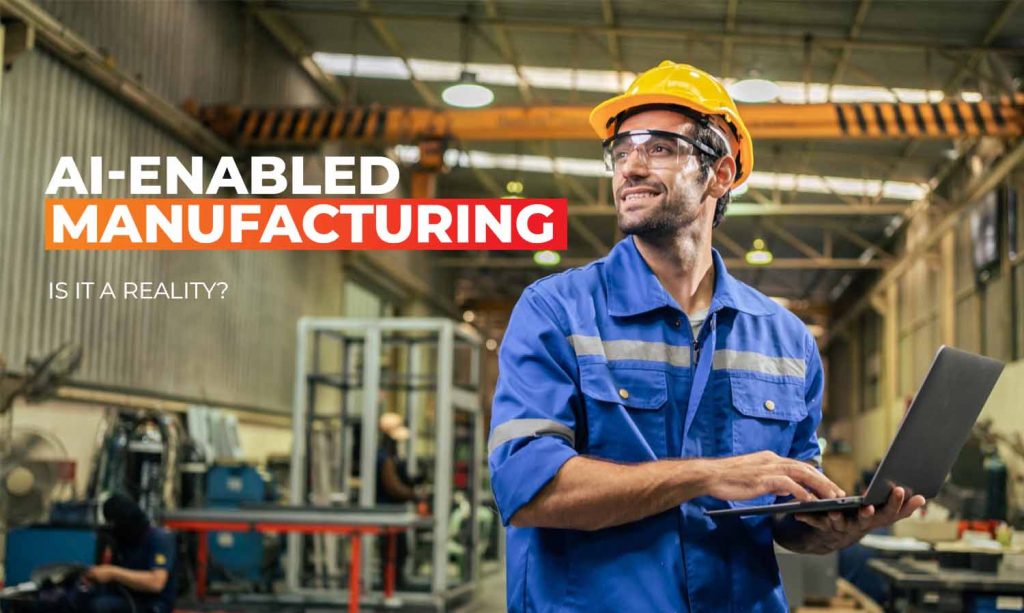
Mid-sized manufacturers face constant pressure.
Large enterprises have bigger budgets, larger teams, and more advanced technology. They invest heavily in automation and analytics, widening the efficiency gap over time.
Mid-sized manufacturers encounter this gap daily. Their production planning often stays in spreadsheets. Machine downtime appears without warning. Operational data is spread across multiple systems, with limited visibility.
These problems slow down decisions and create friction across the factory floor.
Artificial intelligence is changing this. What once required huge enterprise budgets is now available to all companies. Mid-sized manufacturers who adopt AI strategically increase efficiency, cut risk, and compete with larger players.
The opportunity is real and the companies that move early are already seeing the impact.
The Real Competitive Gap Between Mid-Sized and Enterprise Manufacturers
Most mid-sized manufacturers know they’re at a disadvantage. The key is pinpointing where that gap lies.
It isn’t in product quality. Mid-sized manufacturers make excellent products. The difference is speed, visibility, and response when things go wrong.
Large enterprises use integrated systems feeding live data across all plants. Their operations director knows instantly which lines underperform, which suppliers are delayed, and what maintenance is pending. Fast decisions follow from real-time information.
Most mid-sized manufacturers rely on weekly reports, reactive maintenance, and siloed production data. When something breaks, it’s discovered only after losses are incurred. A demand spike scrambles supply chains, forcing them to catch up.
That’s the gap. And it’s fixable.
AI Has Fundamentally Changed What’s Accessible to Mid-Sized Manufacturers
Five years ago, deploying AI in a manufacturing environment meant building data infrastructure from scratch, hiring a specialist team to maintain it, and waiting 18 months for results. The economics only worked at scale.
That’s no longer true.
Cloud-based AI tools eliminate infrastructure barriers. Pre-trained models fit specific workflows. With modular implementation, you can start small, prove success, and expand from there.
Mid-sized firms are more agile. Enterprises move slowly, needing many approvals and complex change management, while you can launch a pilot in a week. That agility is a real edge.
A 2025 report from Google Cloud found that 78% of manufacturing executives reported their organisations are already seeing returns from AI investments. The fastest gains are coming from companies that picked one problem, built a focused solution, and used the results to fund the next initiative.
Key AI Applications That Level the Playing Field
AI adoption in manufacturing begins with targeted applications that solve real operational problems. Several use cases deliver immediate value for mid-sized manufacturers.
Predictive Maintenance
Equipment downtime disrupts production schedules and increases operating costs. Maintenance teams often rely on scheduled servicing or reactive repairs after failures occur.
AI-driven predictive maintenance analyses machine sensor data and historical performance patterns to help manufacturers reduce unexpected downtime and avoid costly repairs.
Maintenance teams receive early alerts. Repairs occur before breakdowns disrupt production.
This approach reduces downtime, extends equipment life, and stabilises production schedules.
AI-Driven Production Planning
Production planning requires constant coordination between demand forecasts, machine capacity, workforce availability, and supply chain inputs.
Many manufacturers still plan manually.
AI evaluates many variables at once. It analyses demand, throughput, and resource limits to optimise production schedules and reduce bottlenecks.
Factories operate with more predictable output. Planning teams spend less time manually adjusting schedules.
Computer Vision for Quality Inspection
In many facilities, quality inspection is still labour-intensive. Human inspectors rely on visual checks and experience to spot defects.
Computer vision uses cameras and machine learning to inspect products in real time, quickly and accurately identifying defects and measurement errors.
Inspection speed increases. Product quality becomes more consistent. Waste from defective products declines.
Manufacturers achieve stronger quality control without expanding inspection teams.
Supply Chain Intelligence
Manufacturers depend heavily on reliable supply chains.
Delays in raw material delivery or inaccurate demand forecasts create production instability. Inventory shortages halt production lines while excess inventory ties up working capital.
AI analyses supplier data, demand patterns, and logistics. This supports better inventory and supplier coordination.
Manufacturers maintain optimal stock levels and respond faster to supply disruptions.
Speed Becomes a Competitive Advantage
Large enterprises operate complex decision structures. Multiple layers of management review operational changes before implementation.
Mid-sized manufacturers operate differently.
Leadership teams remain close to operations. Decisions move quickly. Adjustments happen faster across the organisation.
AI strengthens this advantage.
Operational leaders gain access to timely insights rather than delayed reports. Data from production lines, maintenance systems, and quality inspections feeds directly into decision dashboards.
Leaders act immediately when performance changes.
Factories become more responsive. Teams solve problems earlier. Continuous improvement becomes part of daily operations.
Speed becomes a strategic advantage.
Why manufacturers hesitate to adopt AI
Many manufacturing leaders hesitate to explore AI due to several misconceptions.
AI requires massive budgets.
Modern AI implementations often begin with targeted use cases. A focused project around predictive maintenance or quality inspection can deliver measurable results quickly.
AI demands large datasets.
Operational data already exists across most factories. Machine logs, production records, maintenance reports, and quality inspections provide valuable inputs for AI models.
AI requires a full digital transformation.
Manufacturers start with a single operational challenge and expand gradually. Incremental adoption delivers steady improvements without disrupting operations.
Companies succeed with AI by tackling practical problems and implementing focused solutions.
Why Custom AI Solutions Deliver Stronger Results
Manufacturing environments vary widely.
Production workflows differ across facilities. Equipment configurations change. Operational priorities evolve over time.
Generic software platforms struggle to adapt to these realities.
Custom AI solutions align directly with operational workflows. They integrate with existing systems, analyse relevant operational data, and address specific manufacturing challenges.
The result is automation that fits the factory rather than forcing the factory to adapt to rigid software structures.
Manufacturers gain solutions designed for their operations.
The Future of Competitive Manufacturing
Manufacturing continues to evolve rapidly.
Factories are becoming increasingly connected. Equipment generates continuous operational data. Supply chains operate with greater transparency.
Artificial intelligence will become a core layer of manufacturing operations.
Factories will predict equipment issues before they occur. Production schedules will adjust automatically based on demand patterns. Quality inspection will operate continuously with machine vision.
Manufacturers that adopt these capabilities early will build operational advantages that compound over time.
Mid-sized manufacturers are well-positioned to benefit from this transformation. Their ability to move quickly allows them to implement new technologies faster than large enterprises.
The industry is already moving, are you?
Not Sure Where to Start?
MSBC Group offers a free AI Readiness Assessment built specifically for manufacturing and construction businesses. In 10 minutes, you’ll see clearly where automation can have the fastest impact on your operation, with no jargon and no sales pressure.